Giants and Dwarfs – The Outer Solar System

Share
Wander among the asteroids! Discover the secrets of the outer Solar System—the worlds of the “giants,” namely Jupiter, Saturn, Uranus, and Neptune. Get to know the Solar System’s special dwarfs as well, which tell the story of how this unique world came to be.
Our solar system consists of 8 planets and can be divided into two major regions: the inner and outer solar systems. This is where the “giants” stay, where Jupiter is not only large but also a system-shaping force. Saturn’s rings demonstrate just how much change occurs over time in the life of a planet.

The asteroid belt stretches across the border between the two provinces, and as we move outward, we enter the outer reaches of the Kuiper Belt, where the unique history of the dwarf planets awaits us. Just when we think it’s over, we reach the final frontier: the Oort Cloud, a reservoir of distant comets, where the history of the Solar System is more of a hunch than a map.
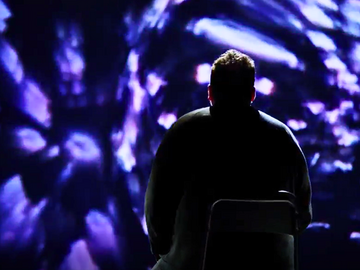
At Studio 180°guided tour, you can step into a 3D space where you can fly among the stars and discover planets— all enhanced with interactive visualizations based on real-time, scientific data.

Behind the spectacle lies state-of-the-art technology: every projection is based on scientifically accurate data provided by the latest astronomical research. During the presentation, which is controlled with an Xbox controller, you can always see the planets in their current positions.

The 3D glasses and surround sound provide such a realistic experience that it feels as if you’re actually floating in space, while you explore the structure and endless dynamics of the universe.
Each presentation is led by an instructor who helps you discover the infinite facets of outer space through exciting stories and fascinating facts. This experience is both inspiring and thought-provoking: it helps bring us closer to that vast world of which we, too, are a tiny part.
Useful Information:
- The screening starts right on time. Please arrive on time, as you will not be allowed to enter once the screening has begun.
- Recommended age group: 6+
- Wheelchair accessible: yes
- Strollers: may be stored in the coat check.
- Running time: approx. 25 minutes
Related articles
-

-

-

-

-

-

-
-
-
-

-
-
-
-
-
-
-

-
-
-
-

-

-

-

-
-

-